Next-Generation Embodied Data Collection Solution
EMG Foundation Model · One Model for Thousands of Users
Exoskeleton Glove · Human–Robot Kinematic Isomorphism

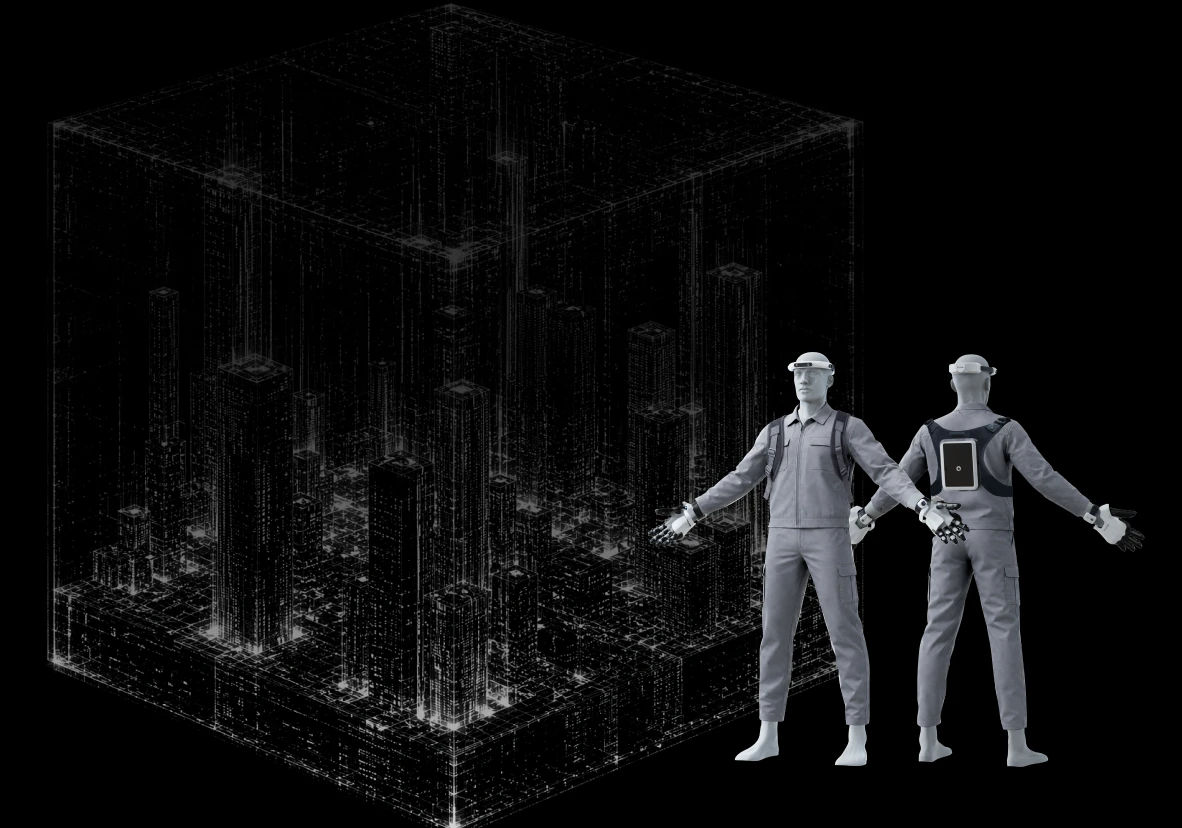
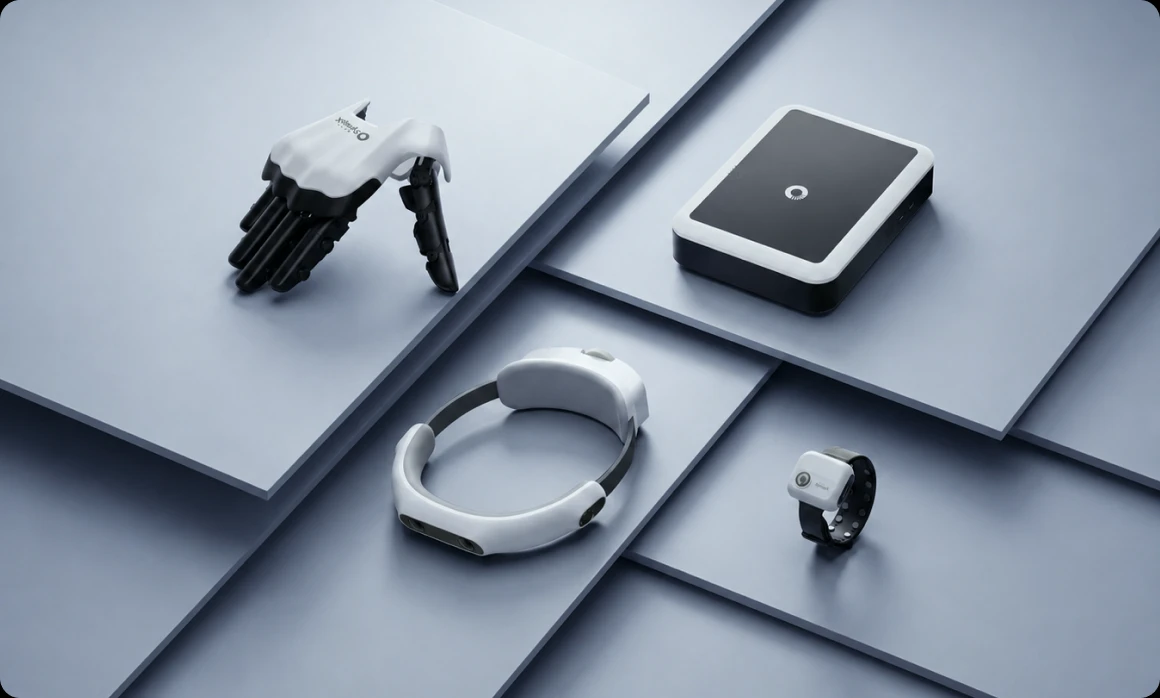
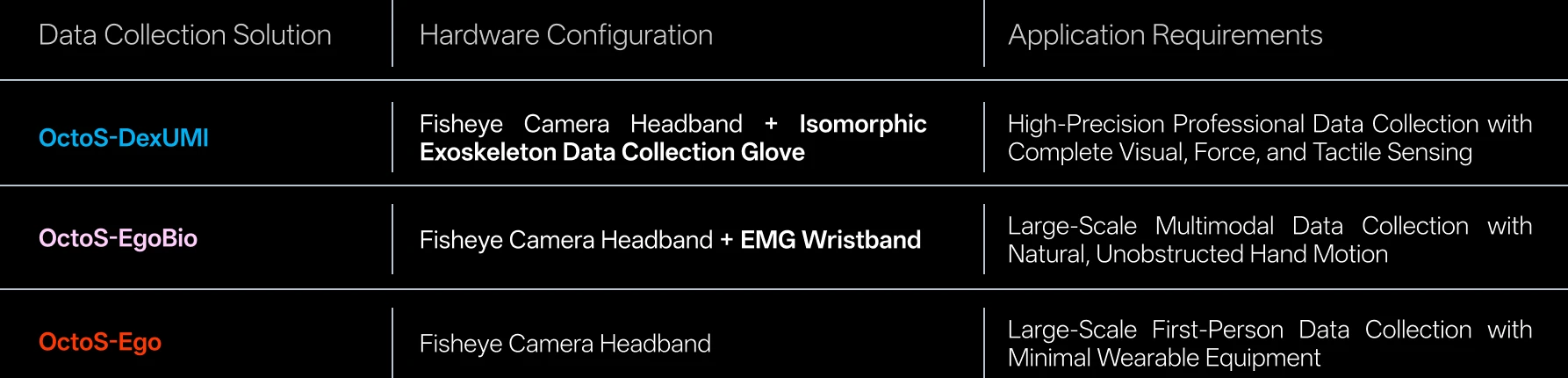
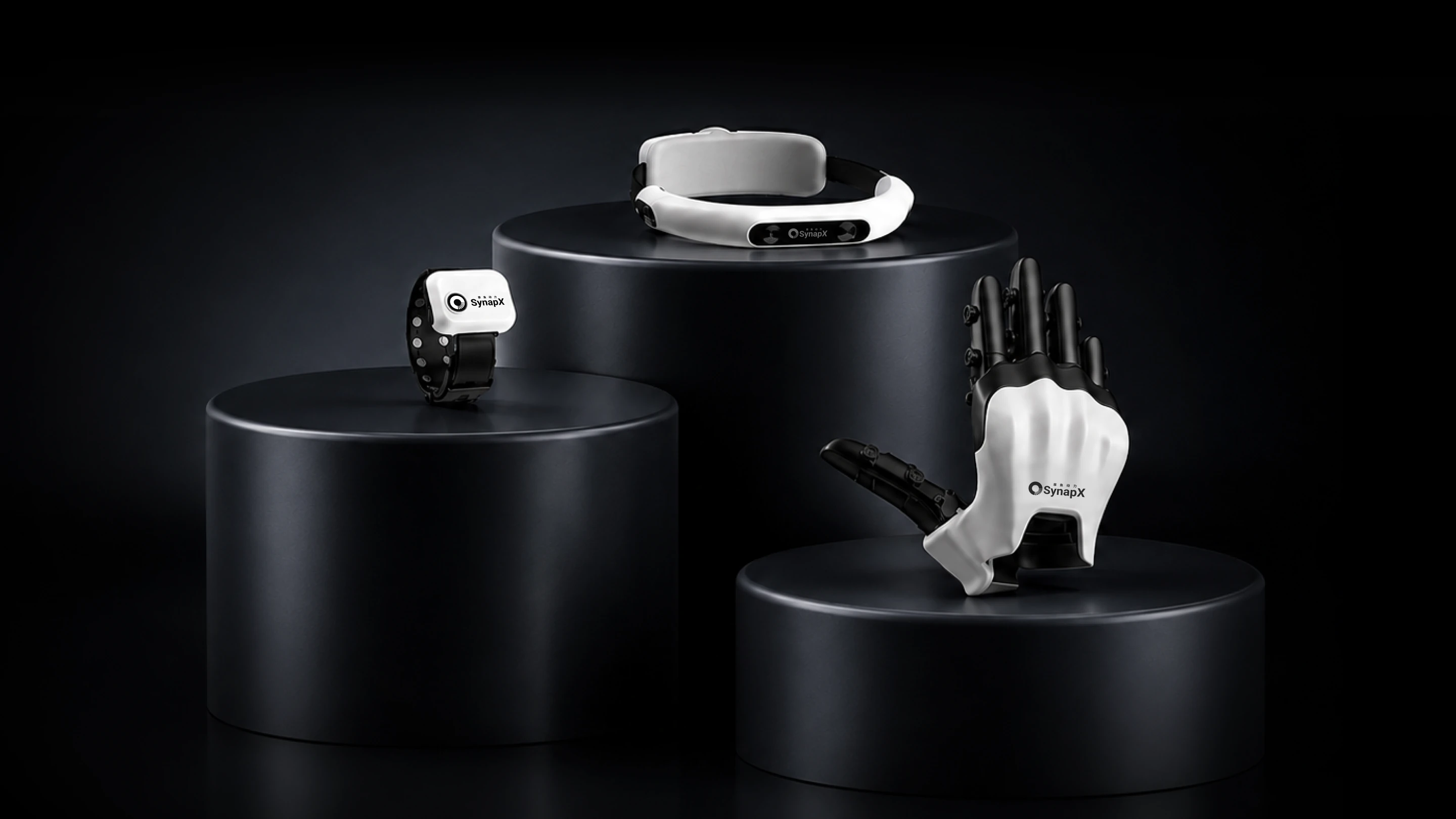
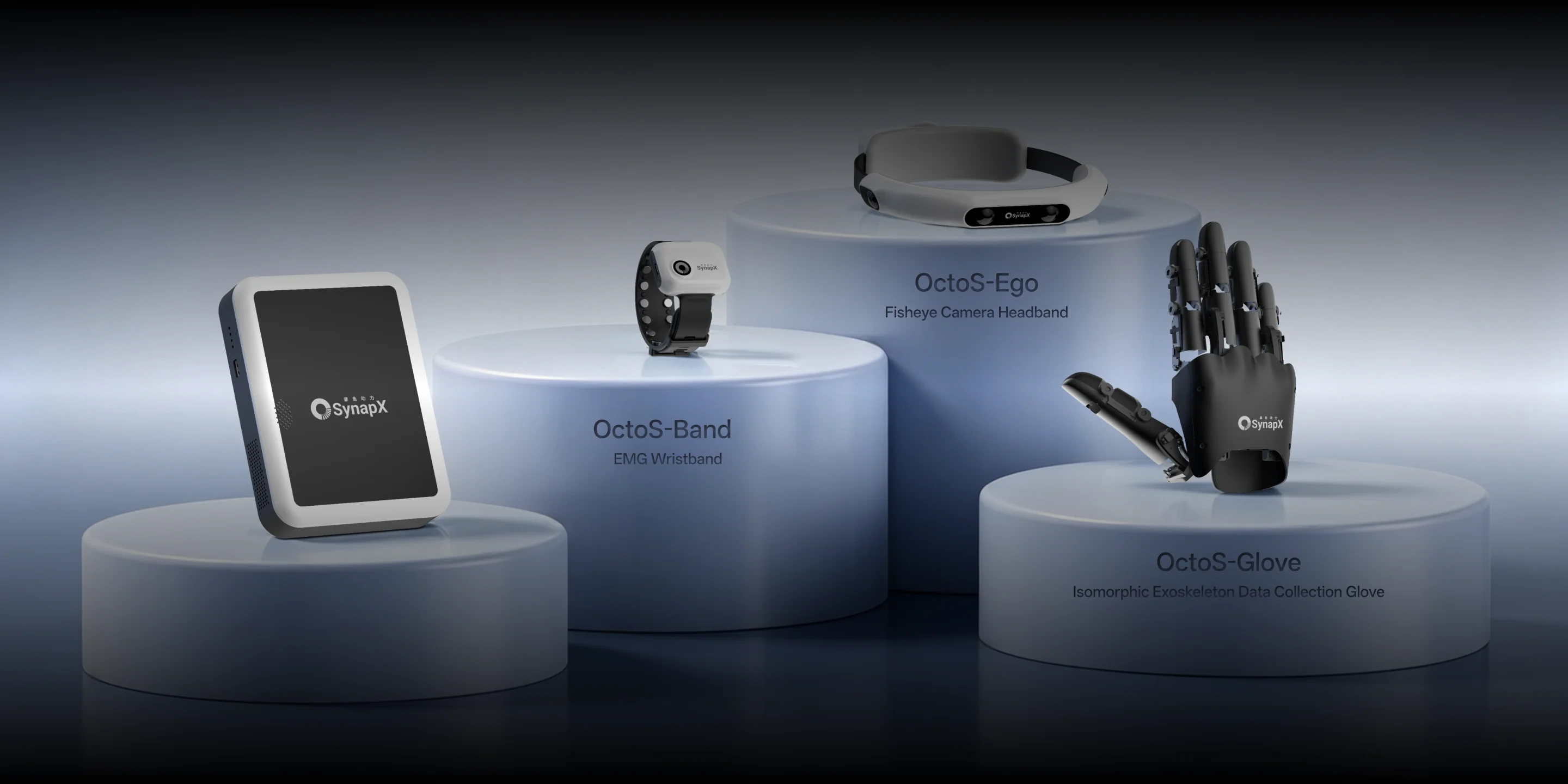
OctoSense is built around three core sensing components: the OctoS-Ego fisheye headband, OctoS-Band EMG wristband, and OctoS-Glove isomorphic exoskeleton data glove. Together, they form three data collection solutions: OctoS-Ego, OctoS-EgoBio, and OctoS-DexUMI. Powered by OctoS-Forge model algorithms and data engineering, OctoSense transforms real-world human manipulation into standardized, traceable datasets. Rather than replacing one another, the three solutions offer different trade-offs across behavioral naturalness, collection scale, physical modality coverage, and ground-truth accuracy.
Embodied Data Value = Physical Completeness × Scenario Diversity × Collection Scale × Data Quality
The four factors are multiplicative, not additive—if any one factor approaches zero, the overall value of the data is significantly diminished.


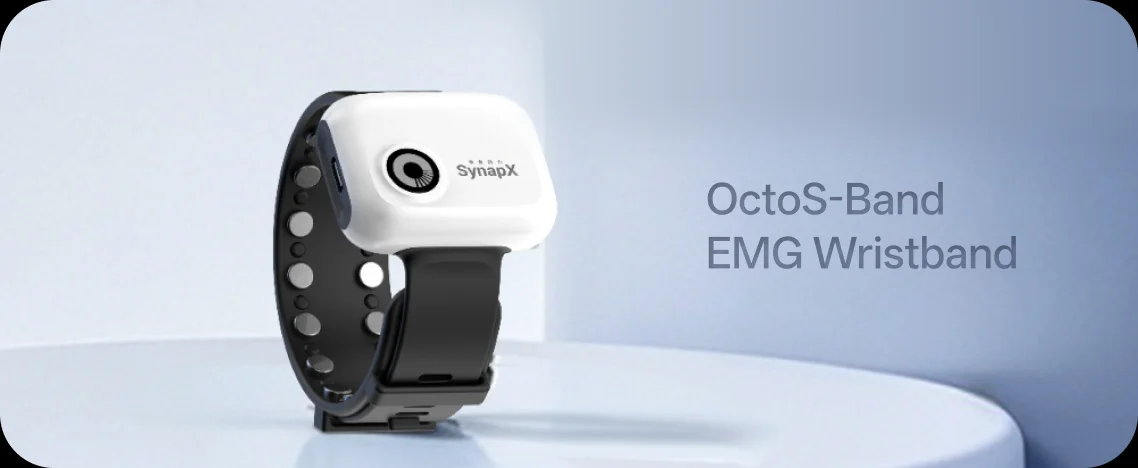
World’s First EMG Foundation Model with Zero-Shot Cross-Subject Generalization
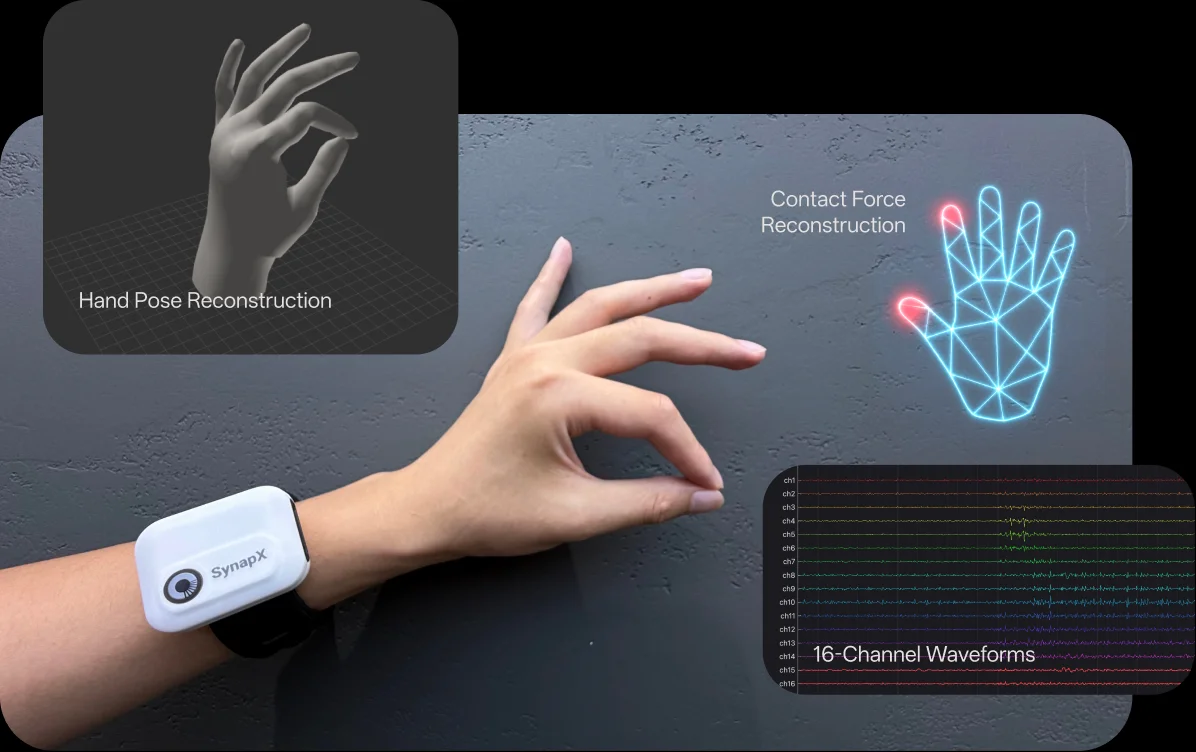

Ready to Use for New Users—No Additional Data Collection or Calibration Required

Recovers Hand Poses and Applied Forces That Cannot Be Observed Visually.

50% Lower Error Than emg2pose, Achieving Millimeter-Level Absolute Positioning Accuracy

Near-lossless transfer of human hand motion and force directly to the physical robotic hand.
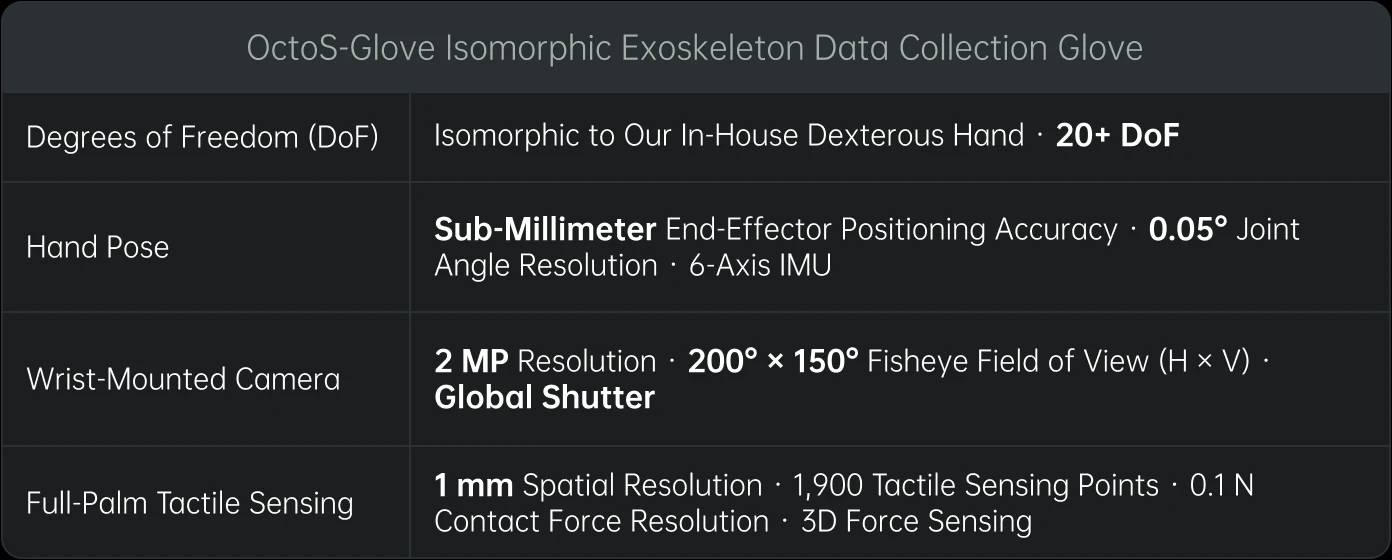
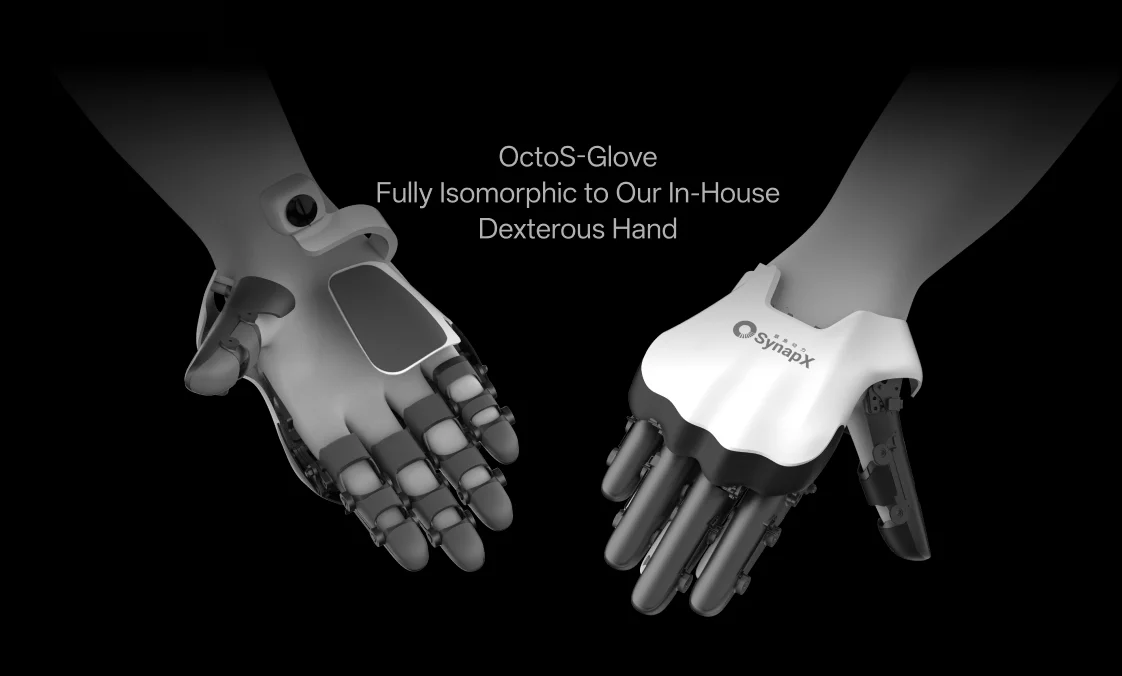
OctoS-Glove shares the same joint DoF and kinematic structure as our in-house dexterous hand, creating a unified isomorphic architecture between the data-collection device and the robot hardware. Training a target robot with data collected from a different embodiment typically requires cross-embodiment retargeting, which introduces deformation and errors—collectively known as the Retargeting Gap. OctoS-Glove eliminates this gap at the source: collected data is aligned nearly 1:1 with the dexterous hand, with no retargeting required.

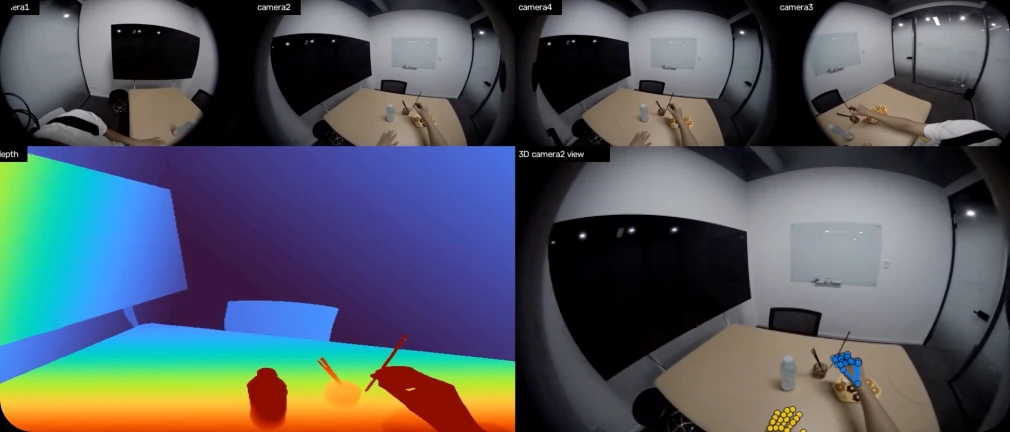
Transforming Collected Data into Standardized, Reusable Datasets.
SYNStereo Spatial Foundation Model reconstructs absolute-scale 3D geometry, while the SYNEMG Foundation Model reconstructs hand pose and contact force.
Unified Timeline · Segmentation by Action · Low-Quality Data Filtering
Semantic Annotation · Version Management · Data Lineage